TOTs Parent Mobile App (Case Study)
Designing a Trusted Community Platform for Mothers Across Different Life Stages
Client
Literesult
Services
Social Media
Timeline
3 weeks
Overview
Product:
TOTs Parent Mobile App
Role:
Product Designer (UI/UX)
Platform:
Mobile (iOS & Android)
Project Type:
New product (0 → 1)
Responsibility:
UX strategy, interaction design, UI, and product thinking
Team:
Worked with 1 PMs, 2 Developers & 2 Intern
Context
TOTs was designed as a social platform for mothers; ranging from first-time moms to experienced parents; to connect, share experiences, and support each other. The goal was to create a safe, engaging, and easy-to-use environment for conversations around parenting.
Unlike traditional social apps, the product needed to balance:
Emotional sensitivity.
Information clarity.
Community trust.
As the designer, I worked closely with stakeholders to define how users would interact, engage, and return to the platform over time.
Problem Statement
Early exploration revealed three key challenges:
Parenting conversations are highly personal, requiring a safe and trustworthy environment.
Users have different needs depending on their stage of motherhood.
Traditional social feeds can be overwhelming and difficult to navigate.
The core challenge was designing a platform that felt supportive, relevant, and easy to engage with, without adding cognitive or emotional overload.
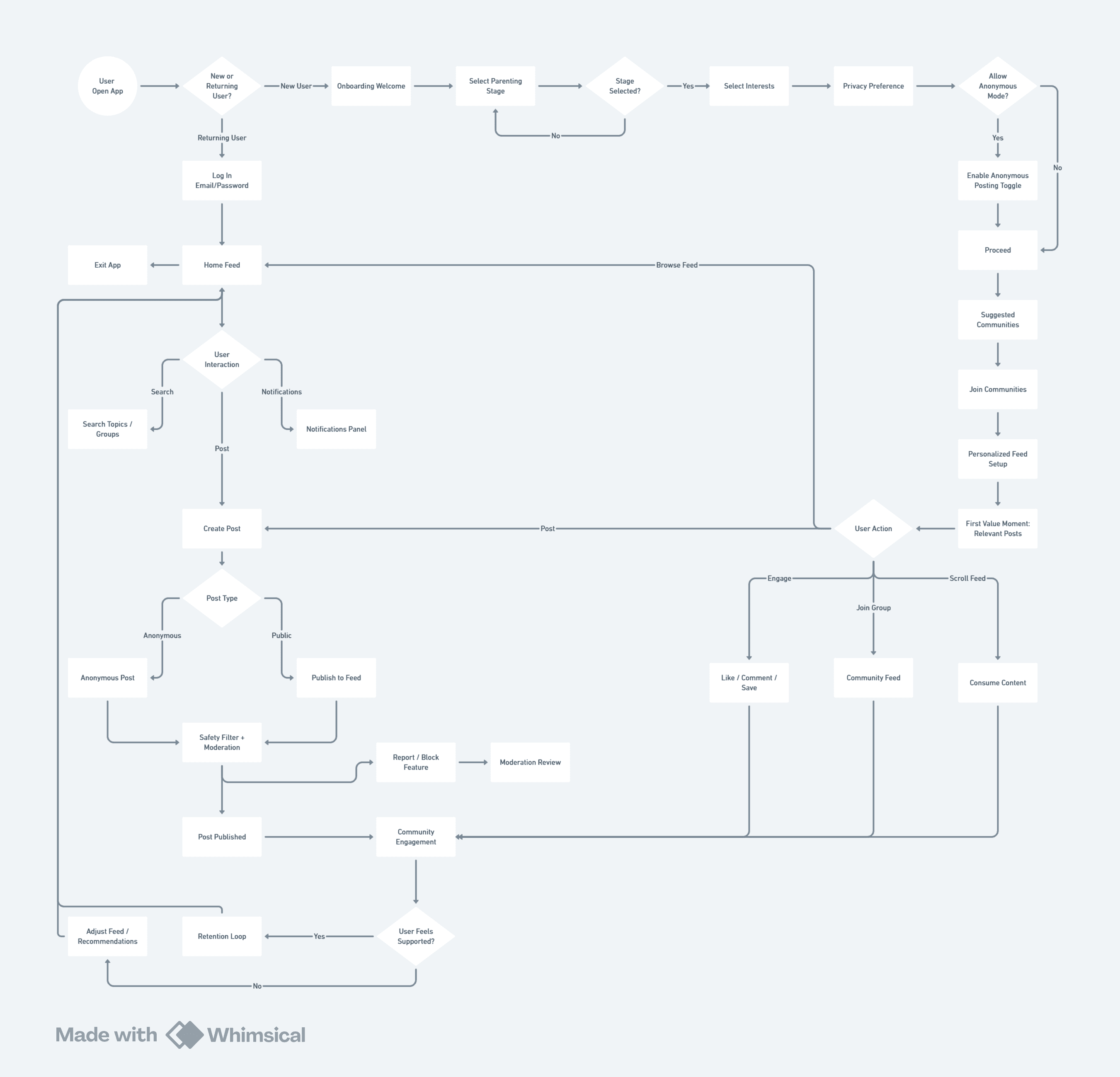
End-to-End User Flow
For the Tots Parent Mobile App
User Personas
Target Audience Profiles for TOTs Parent App
The Anxious First-Time Mom

Name:
Amara Okafor
Age:
28
Location:
Lagos, Nigeria
Occupation:
Marketing Executive
Family Status:
First-time mom (3-month-old baby)
💬 Quote
“I just want to know if I’m doing this right.”
🧠 Background
Amara recently became a mother and is navigating constant uncertainty. She consumes a lot of online content but struggles to know what to trust. She often feels overwhelmed by conflicting advice and fears judgment when asking “basic” questions.
🎯 Goals
Get reliable parenting advice.
Feel reassured she’s doing things right.
Connect with moms in the same stage.
Ask questions without feeling judged.
😟 Pain Points
Information overload from social media.
Fear of being judged for “simple” questions.
Difficulty finding relevant content for her stage.
Feels alone during late-night moments.
💬 Quote
“I just want to know if I’m doing this right.”
📱 Behavior
Mostly active late at night.
Consumes more than she posts.
Saves helpful posts.
Prefers private or anonymous interactions.
💡 Needs from TOTs
Stage-based content (new born).
Anonymous posting option.
Small, safe communities.
Clear, simple feed (not noisy).
🎨 Design Implications
Reduce cognitive overload.
Promote “safe to ask anything” environment.
Highlight relatable content first.
Encourage gentle engagement (low pressure).
The Supportive Experienced Mom

Name:
Tola Adeyemi
Age:
36
Location:
Abuja, Nigeria
Occupation:
Entrepreneur
Family Status:
Mother of 3 (ages 2, 6, 9)
💬 Quote
“I’ve learned so much—I just want to help other moms.”
🧠 Background
Tola has years of parenting experience and enjoys helping other moms. She often shares advice in WhatsApp groups but feels traditional platforms are too noisy and not structured for meaningful support.
🎯 Goals
Share knowledge and support others.
Be part of meaningful conversations.
Build a trusted community.
Learn new parenting perspectives.
😟 Pain Points
Social platforms feel chaotic and superficial.
Valuable advice gets lost in noisy feeds.
Hard to find serious discussions.
Limited tools for structured support.
💬 Quote
“I just want to know if I’m doing this right.”
📱 Behavior
Actively comments and engages.
Writes long, thoughtful posts.
Joins niche communities.
Returns frequently throughout the day.
💡 Needs from TOTs
Community groups by topic.
Ability to mentor or support.
Visibility for valuable contributions.
Meaningful engagement (not likes-driven).
🎨 Design Implications
Prioritize depth over virality.
Surface thoughtful responses.
Enable community leadership roles.
Encourage knowledge-sharing.
The Private, Overwhelmed Mom

Name:
Zainab Bello
Age:
32
Location:
Kano, Nigeria
Occupation:
Teacher
Family Status:
Mother of 2 (newborn + toddler)
💬 Quote
“Sometimes I’m not okay… but I can’t say it out loud.”
🧠 Background
Zainab is juggling two young children and feels emotionally and physically drained. She struggles with postpartum stress but is hesitant to speak openly due to cultural and social expectations.
🎯 Goals
Find emotional support.
Read relatable experiences.
Feel less alone.
Share sensitive concerns safely.
😟 Pain Points
Fear of stigma (mental health, parenting struggles).
Lack of safe spaces to express vulnerability.
Feels invisible in traditional social apps.
Easily overwhelmed by too much content.
💬 Quote
“I just want to know if I’m doing this right.”
📱 Behavior
Mostly lurks (reads but doesn’t post).
Engages anonymously if possible.
Prefers quiet, supportive spaces.
Uses app in short sessions.
💡 Needs from TOTs
Anonymous posting and browsing.
Mental health–safe spaces.
Calm, clutter-free interface.
Empathetic content recommendations.
🎨 Design Implications
Strong privacy features (core, not optional).
Highlight emotional safety cues.
Reduce visual and content noise.
Encourage passive engagement (no pressure).
Goals & Success Criteria
Enable meaningful conversations between mothers.
Reduce friction in posting, replying, and discovering content.
Increase engagement and repeat usage.
Create a safe and structured community environment.
Success was measured through engagement signals such as interaction frequency, content discovery, and qualitative user feedback.
My Role & Approach
1. Defining User Segments & Needs
I identified key user groups to guide product decisions:
First-time mothers (seeking guidance and reassurance).
Experienced mothers (sharing knowledge and advice).
Older mothers (seeking community and discussion).
This helped shape content structure and prioritization.
2. Structuring the Community Experience
To avoid overwhelming users, I:
Organized content into clear, relevant categories.
Designed a feed that prioritizes useful and relatable content.
Introduced progressive disclosure to keep the interface simple.
The goal was to make content discovery feel intentional, not chaotic.
3. Designing for Trust & Safety
Given the sensitive nature of discussions, I focused on:
Clear content hierarchy to reduce confusion.
Friendly, non-intimidating UI patterns.
Reducing friction in posting and responding.
Design decisions were made to make users feel comfortable sharing and engaging.
4. Interaction & Engagement Design
To support repeat usage, I:
Simplified key actions (posting, commenting, reacting).
Designed interactions to feel quick and lightweight.
Ensured users could easily return to relevant conversations.
This supported a more active and sustained community experience.
The Solution
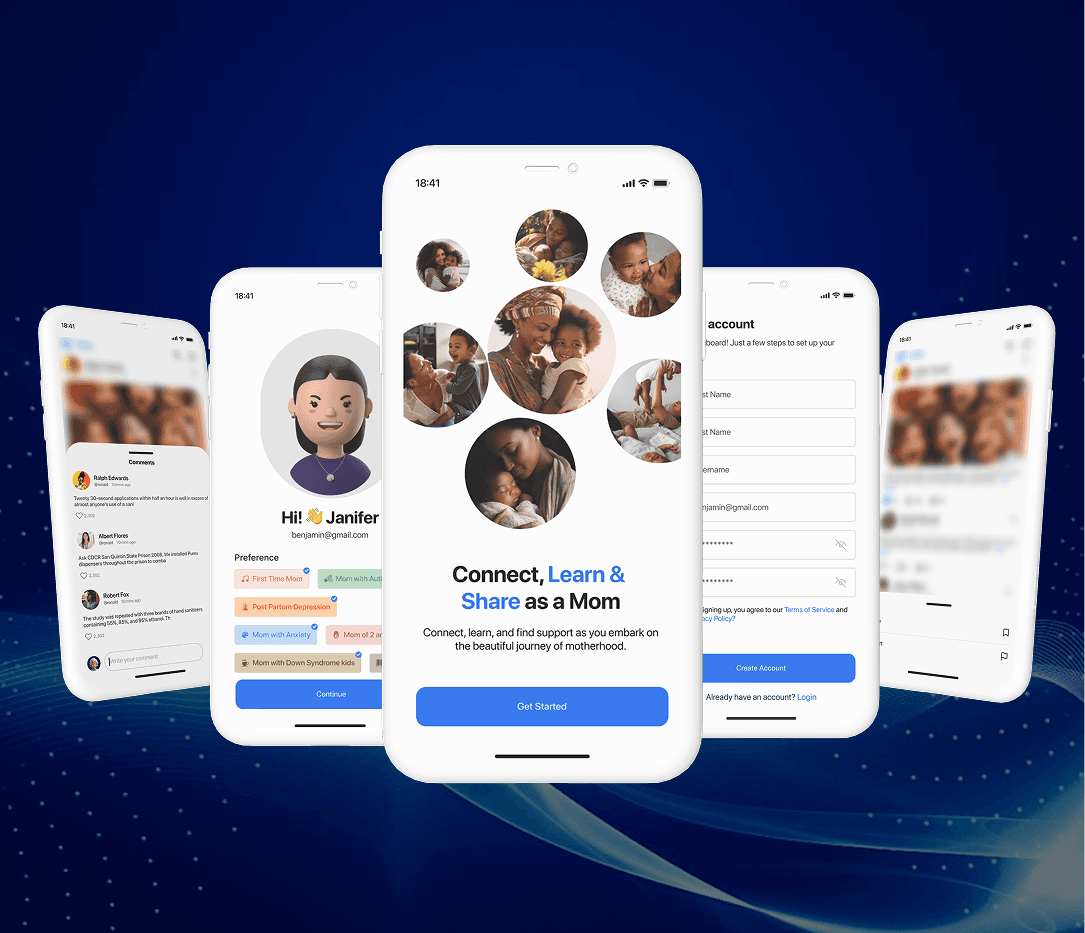
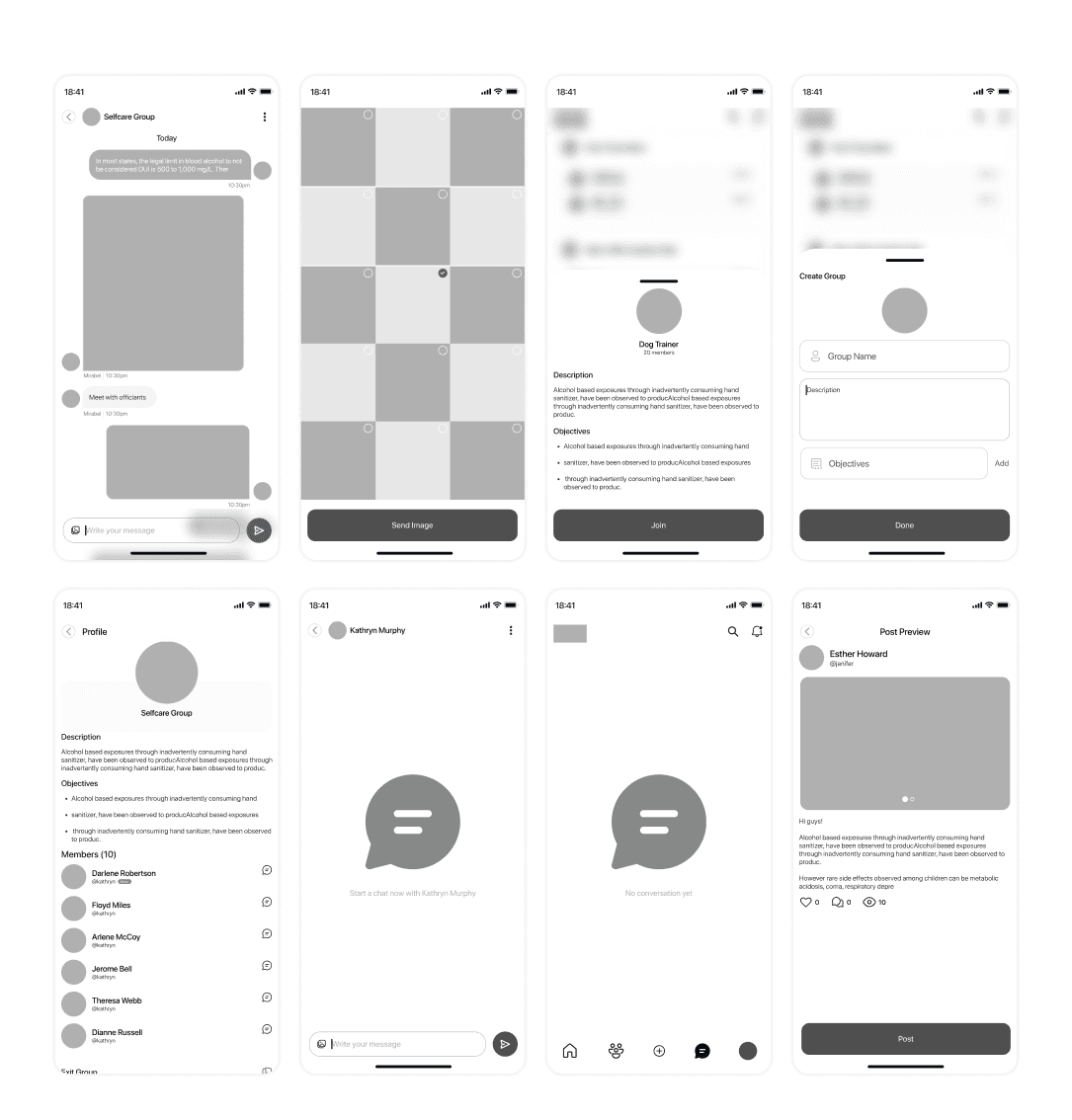
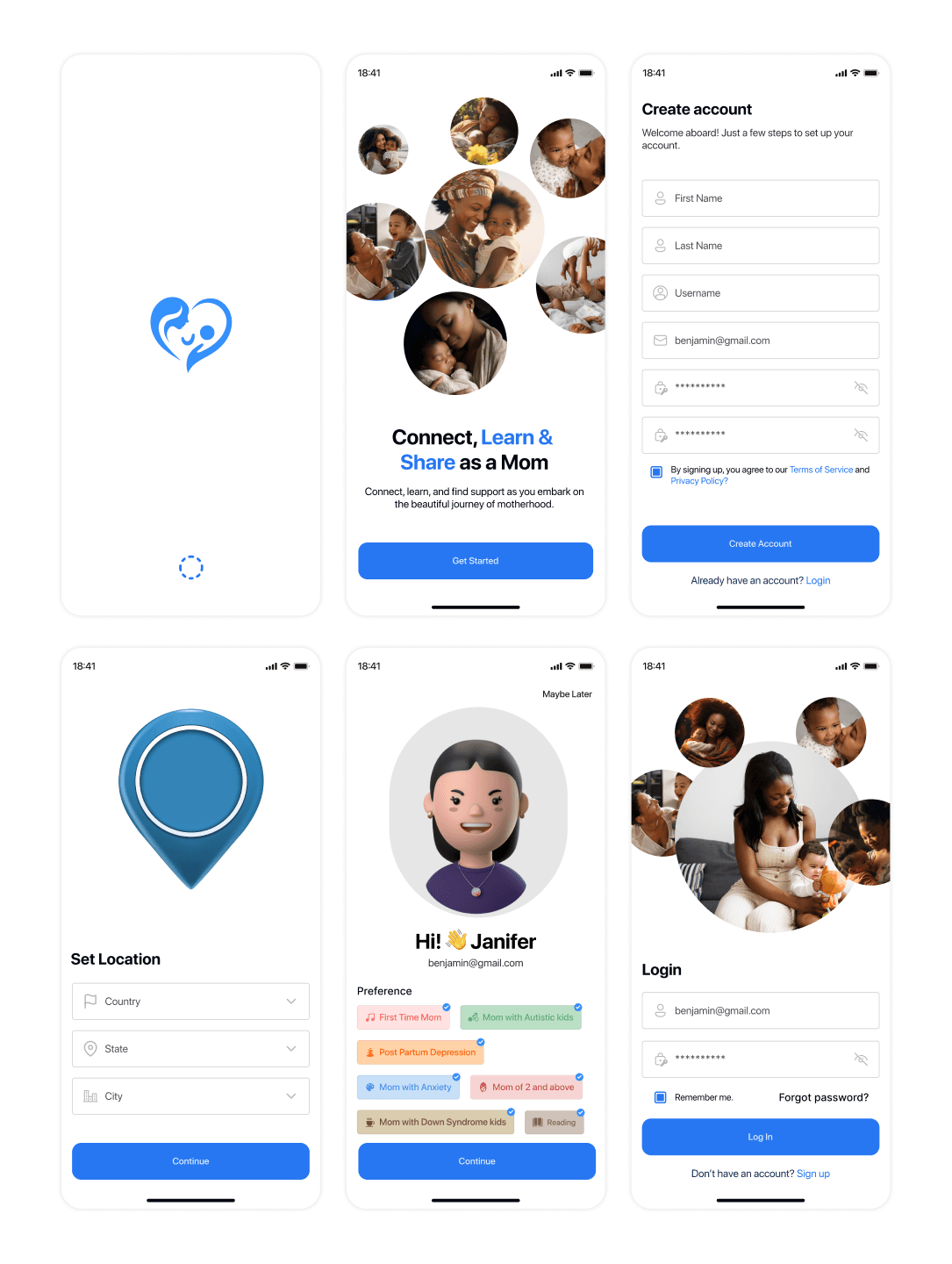
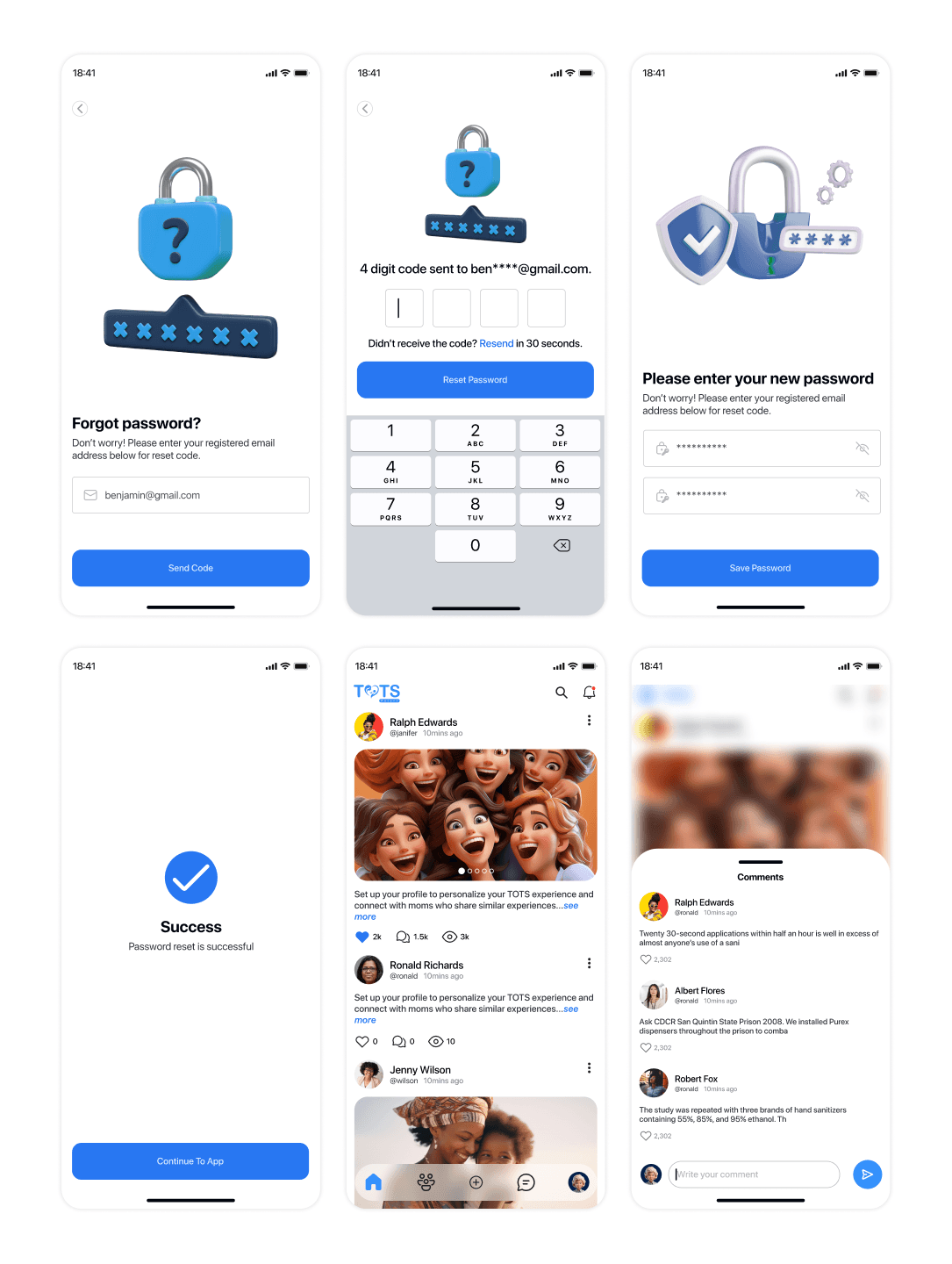
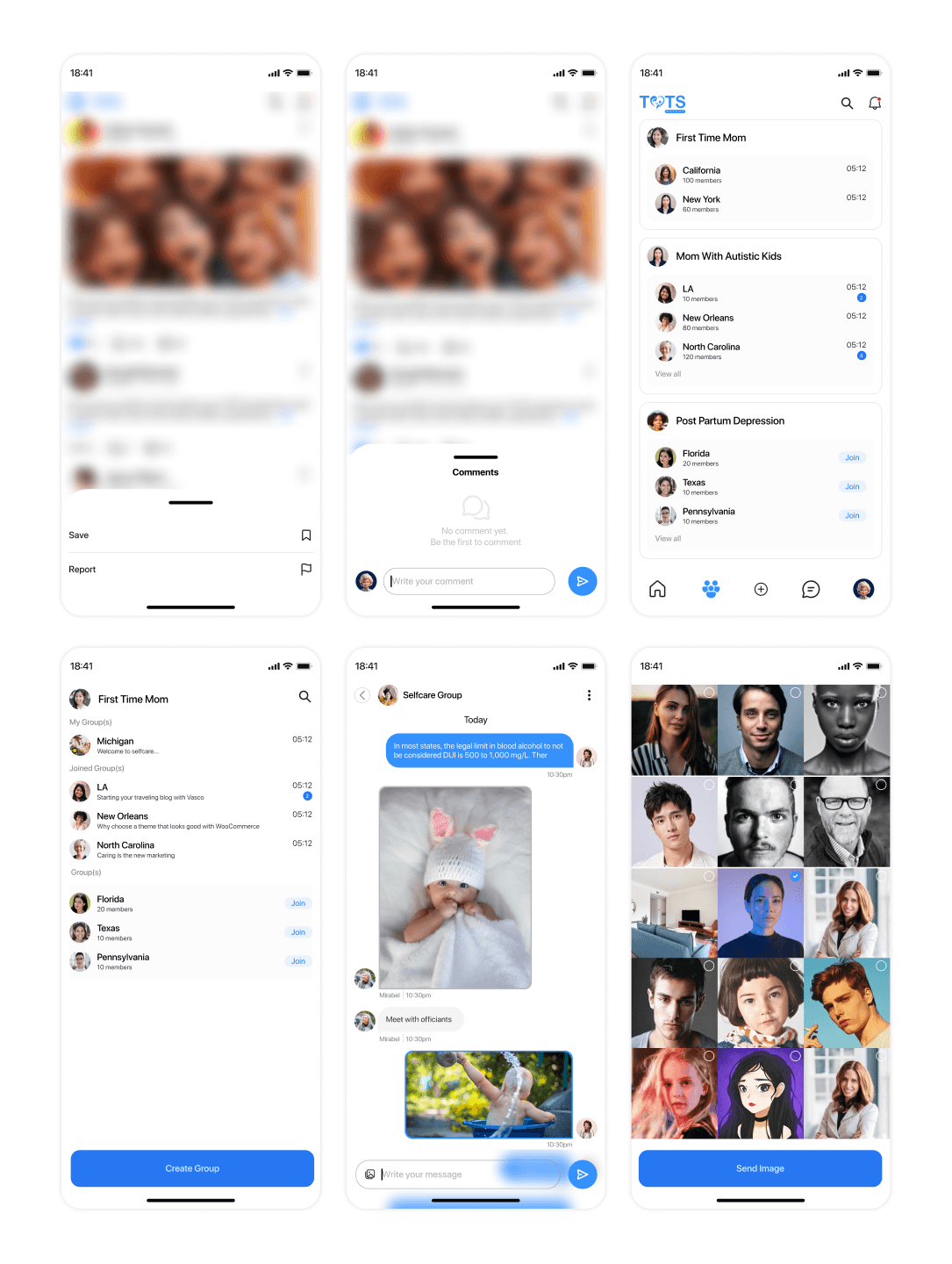
The final product is a mobile-first social platform that enables mothers to share experiences, ask questions, and engage in meaningful conversations within a structured, easy-to-use environment.
The design balances simplicity, emotional sensitivity, and usability; making it easy for users to participate without feeling overwhelmed.
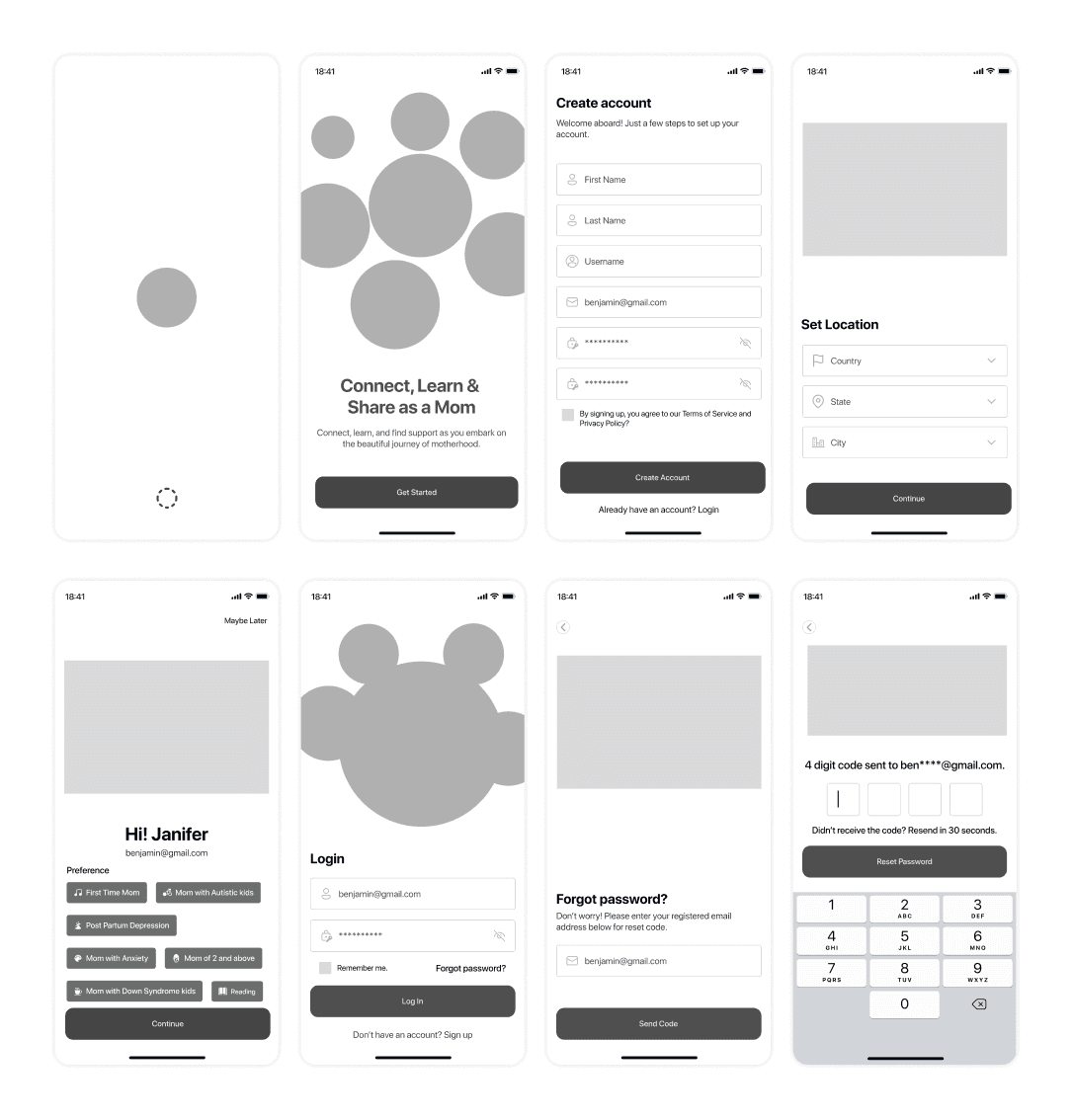
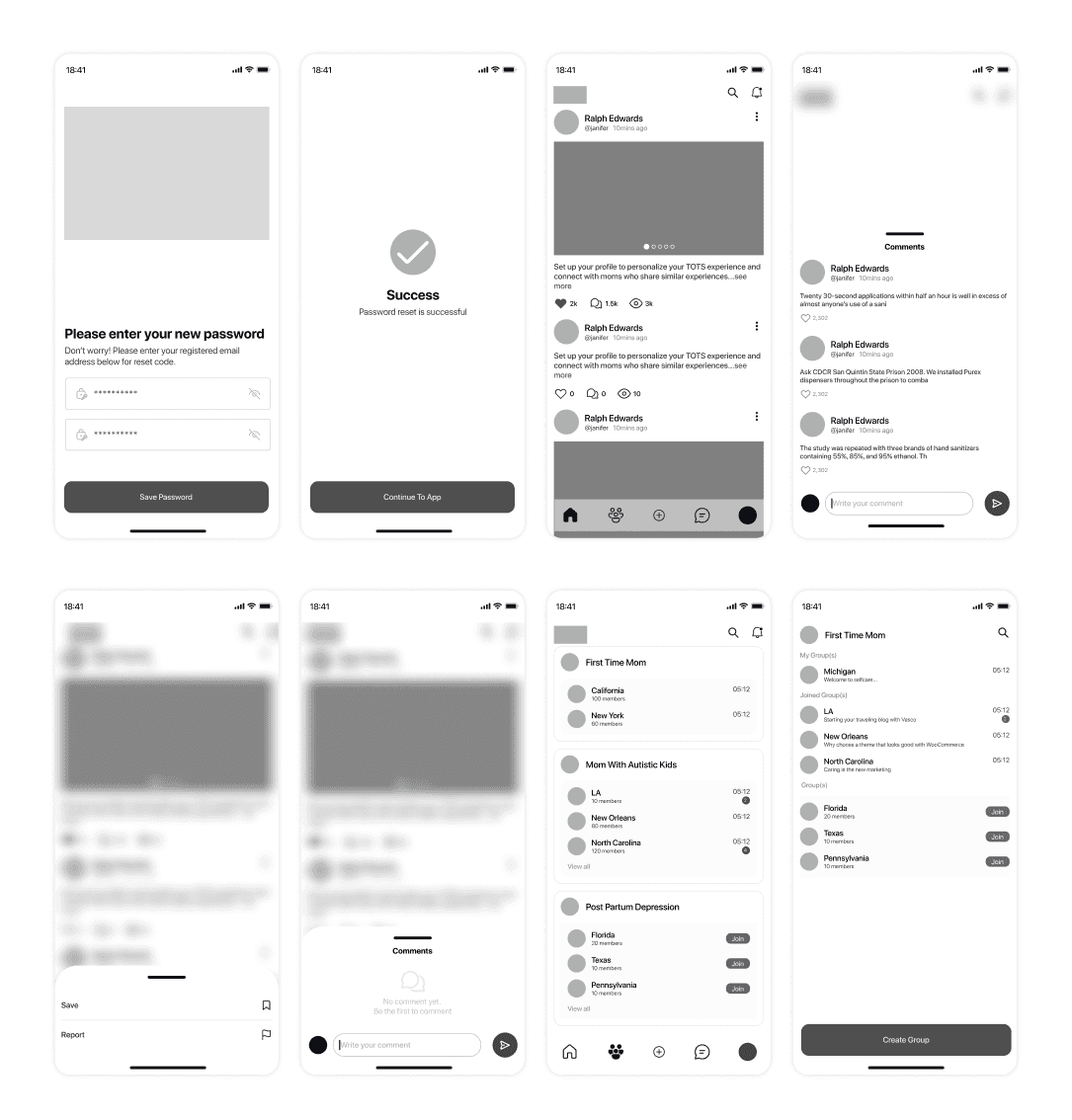
Wireframe
Outcome & Impact
Reduced friction in posting and interaction flows by 25–30%.
Improved content discoverability through structured categories and clearer navigation.
Early feedback indicated increased willingness to engage and share experiences.
Established a scalable foundation for community growth and future features.
Trade-offs & Decisions
Prioritized structured content over a free-form feed to reduce noise.
Deferred advanced social features (e.g., complex filters, groups) to maintain simplicity.
Focused on core interactions before expanding engagement mechanics.
Key Learnings
Designing for community requires more than usability; it requires understanding emotional context, trust, and behavior. Creating a safe and intuitive environment encourages users not just to use the product, but to actively participate in it.
High Fidelity Design
Other Project

TOTs Parent Mobile App (Case Study)
Designing a Trusted Community Platform for Mothers Across Different Life Stages
Client
Literesult
Services
Social Media
Timeline
3 weeks
Overview
Product:
TOTs Parent Mobile App
Role:
Product Designer (UI/UX)
Platform:
Mobile (iOS & Android)
Project Type:
New product (0 → 1)
Responsibility:
UX strategy, interaction design, UI, and product thinking
Team:
Worked with 1 PMs, 2 Developers & 2 Intern
Context
TOTs was designed as a social platform for mothers; ranging from first-time moms to experienced parents; to connect, share experiences, and support each other. The goal was to create a safe, engaging, and easy-to-use environment for conversations around parenting.
Unlike traditional social apps, the product needed to balance:
Emotional sensitivity.
Information clarity.
Community trust.
As the designer, I worked closely with stakeholders to define how users would interact, engage, and return to the platform over time.
Problem Statement
Early exploration revealed three key challenges:
Parenting conversations are highly personal, requiring a safe and trustworthy environment.
Users have different needs depending on their stage of motherhood.
Traditional social feeds can be overwhelming and difficult to navigate.
The core challenge was designing a platform that felt supportive, relevant, and easy to engage with, without adding cognitive or emotional overload.
End-to-End User Flow
For the Tots Parent Mobile App
User Personas
Target Audience Profiles for TOTs Parent App
The Anxious First-Time Mom
Name:
Amara Okafor
Age:
28
Location:
Lagos, Nigeria
Occupation:
Marketing Executive
Family Status:
First-time mom (3-month-old baby)
💬 Quote
“I just want to know if I’m doing this right.”
🧠 Background
Amara recently became a mother and is navigating constant uncertainty. She consumes a lot of online content but struggles to know what to trust. She often feels overwhelmed by conflicting advice and fears judgment when asking “basic” questions.
🎯 Goals
Get reliable parenting advice.
Feel reassured she’s doing things right.
Connect with moms in the same stage.
Ask questions without feeling judged.
😟 Pain Points
Information overload from social media.
Fear of being judged for “simple” questions.
Difficulty finding relevant content for her stage.
Feels alone during late-night moments.
💬 Quote
“I just want to know if I’m doing this right.”
📱 Behavior
Mostly active late at night.
Consumes more than she posts.
Saves helpful posts.
Prefers private or anonymous interactions.
💡 Needs from TOTs
Stage-based content (new born).
Anonymous posting option.
Small, safe communities.
Clear, simple feed (not noisy).
🎨 Design Implications
Reduce cognitive overload.
Promote “safe to ask anything” environment.
Highlight relatable content first.
Encourage gentle engagement (low pressure).
The Supportive Experienced Mom
Name:
Tola Adeyemi
Age:
36
Location:
Abuja, Nigeria
Occupation:
Entrepreneur
Family Status:
Mother of 3 (ages 2, 6, 9)
💬 Quote
“I’ve learned so much—I just want to help other moms.”
🧠 Background
Tola has years of parenting experience and enjoys helping other moms. She often shares advice in WhatsApp groups but feels traditional platforms are too noisy and not structured for meaningful support.
🎯 Goals
Share knowledge and support others.
Be part of meaningful conversations.
Build a trusted community.
Learn new parenting perspectives.
😟 Pain Points
Social platforms feel chaotic and superficial.
Valuable advice gets lost in noisy feeds.
Hard to find serious discussions.
Limited tools for structured support.
💬 Quote
“I just want to know if I’m doing this right.”
📱 Behavior
Actively comments and engages.
Writes long, thoughtful posts.
Joins niche communities.
Returns frequently throughout the day.
💡 Needs from TOTs
Community groups by topic.
Ability to mentor or support.
Visibility for valuable contributions.
Meaningful engagement (not likes-driven).
🎨 Design Implications
Prioritize depth over virality.
Surface thoughtful responses.
Enable community leadership roles.
Encourage knowledge-sharing.
The Private, Overwhelmed Mom
Name:
Zainab Bello
Age:
32
Location:
Kano, Nigeria
Occupation:
Teacher
Family Status:
Mother of 2 (newborn + toddler)
💬 Quote
“Sometimes I’m not okay… but I can’t say it out loud.”
🧠 Background
Zainab is juggling two young children and feels emotionally and physically drained. She struggles with postpartum stress but is hesitant to speak openly due to cultural and social expectations.
🎯 Goals
Find emotional support.
Read relatable experiences.
Feel less alone.
Share sensitive concerns safely.
😟 Pain Points
Fear of stigma (mental health, parenting struggles).
Lack of safe spaces to express vulnerability.
Feels invisible in traditional social apps.
Easily overwhelmed by too much content.
💬 Quote
“I just want to know if I’m doing this right.”
📱 Behavior
Mostly lurks (reads but doesn’t post).
Engages anonymously if possible.
Prefers quiet, supportive spaces.
Uses app in short sessions.
💡 Needs from TOTs
Anonymous posting and browsing.
Mental health–safe spaces.
Calm, clutter-free interface.
Empathetic content recommendations.
🎨 Design Implications
Strong privacy features (core, not optional).
Highlight emotional safety cues.
Reduce visual and content noise.
Encourage passive engagement (no pressure).
Goals & Success Criteria
Enable meaningful conversations between mothers.
Reduce friction in posting, replying, and discovering content.
Increase engagement and repeat usage.
Create a safe and structured community environment.
Success was measured through engagement signals such as interaction frequency, content discovery, and qualitative user feedback.
My Role & Approach
1. Defining User Segments & Needs
I identified key user groups to guide product decisions:
First-time mothers (seeking guidance and reassurance).
Experienced mothers (sharing knowledge and advice).
Older mothers (seeking community and discussion).
This helped shape content structure and prioritization.
2. Structuring the Community Experience
To avoid overwhelming users, I:
Organized content into clear, relevant categories.
Designed a feed that prioritizes useful and relatable content.
Introduced progressive disclosure to keep the interface simple.
The goal was to make content discovery feel intentional, not chaotic.
3. Designing for Trust & Safety
Given the sensitive nature of discussions, I focused on:
Clear content hierarchy to reduce confusion.
Friendly, non-intimidating UI patterns.
Reducing friction in posting and responding.
Design decisions were made to make users feel comfortable sharing and engaging.
4. Interaction & Engagement Design
To support repeat usage, I:
Simplified key actions (posting, commenting, reacting).
Designed interactions to feel quick and lightweight.
Ensured users could easily return to relevant conversations.
This supported a more active and sustained community experience.
The Solution
The final product is a mobile-first social platform that enables mothers to share experiences, ask questions, and engage in meaningful conversations within a structured, easy-to-use environment.
The design balances simplicity, emotional sensitivity, and usability; making it easy for users to participate without feeling overwhelmed.
Wireframe
Outcome & Impact
Reduced friction in posting and interaction flows by 25–30%.
Improved content discoverability through structured categories and clearer navigation.
Early feedback indicated increased willingness to engage and share experiences.
Established a scalable foundation for community growth and future features.
Trade-offs & Decisions
Prioritized structured content over a free-form feed to reduce noise.
Deferred advanced social features (e.g., complex filters, groups) to maintain simplicity.
Focused on core interactions before expanding engagement mechanics.
Key Learnings
Designing for community requires more than usability; it requires understanding emotional context, trust, and behavior. Creating a safe and intuitive environment encourages users not just to use the product, but to actively participate in it.
High Fidelity Design
Other Project
TOTs Parent Mobile App (Case Study)
Designing a Trusted Community Platform for Mothers Across Different Life Stages
Client
Literesult
Services
Social Media
Timeline
3 weeks
Overview
Product:
TOTs Parent Mobile App
Role:
Product Designer (UI/UX)
Platform:
Mobile (iOS & Android)
Project Type:
New product (0 → 1)
Responsibility:
UX strategy, interaction design, UI, and product thinking
Team:
Worked with 1 PMs, 2 Developers & 2 Intern
Context
TOTs was designed as a social platform for mothers; ranging from first-time moms to experienced parents; to connect, share experiences, and support each other. The goal was to create a safe, engaging, and easy-to-use environment for conversations around parenting.
Unlike traditional social apps, the product needed to balance:
Emotional sensitivity.
Information clarity.
Community trust.
As the designer, I worked closely with stakeholders to define how users would interact, engage, and return to the platform over time.
Problem Statement
Early exploration revealed three key challenges:
Parenting conversations are highly personal, requiring a safe and trustworthy environment.
Users have different needs depending on their stage of motherhood.
Traditional social feeds can be overwhelming and difficult to navigate.
The core challenge was designing a platform that felt supportive, relevant, and easy to engage with, without adding cognitive or emotional overload.
End-to-End User Flow
For the Tots Parent Mobile App
User Personas
Target Audience Profiles for TOTs Parent App
The Anxious First-Time Mom
Name:
Amara Okafor
Age:
28
Location:
Lagos, Nigeria
Occupation:
Marketing Executive
Family Status:
First-time mom (3-month-old baby)
💬 Quote
“I just want to know if I’m doing this right.”
🧠 Background
Amara recently became a mother and is navigating constant uncertainty. She consumes a lot of online content but struggles to know what to trust. She often feels overwhelmed by conflicting advice and fears judgment when asking “basic” questions.
🎯 Goals
Get reliable parenting advice.
Feel reassured she’s doing things right.
Connect with moms in the same stage.
Ask questions without feeling judged.
😟 Pain Points
Information overload from social media.
Fear of being judged for “simple” questions.
Difficulty finding relevant content for her stage.
Feels alone during late-night moments.
💬 Quote
“I just want to know if I’m doing this right.”
📱 Behavior
Mostly active late at night.
Consumes more than she posts.
Saves helpful posts.
Prefers private or anonymous interactions.
💡 Needs from TOTs
Stage-based content (new born).
Anonymous posting option.
Small, safe communities.
Clear, simple feed (not noisy).
🎨 Design Implications
Reduce cognitive overload.
Promote “safe to ask anything” environment.
Highlight relatable content first.
Encourage gentle engagement (low pressure).
The Supportive Experienced Mom
Name:
Tola Adeyemi
Age:
36
Location:
Abuja, Nigeria
Occupation:
Entrepreneur
Family Status:
Mother of 3 (ages 2, 6, 9)
💬 Quote
“I’ve learned so much—I just want to help other moms.”
🧠 Background
Tola has years of parenting experience and enjoys helping other moms. She often shares advice in WhatsApp groups but feels traditional platforms are too noisy and not structured for meaningful support.
🎯 Goals
Share knowledge and support others.
Be part of meaningful conversations.
Build a trusted community.
Learn new parenting perspectives.
😟 Pain Points
Social platforms feel chaotic and superficial.
Valuable advice gets lost in noisy feeds.
Hard to find serious discussions.
Limited tools for structured support.
💬 Quote
“I just want to know if I’m doing this right.”
📱 Behavior
Actively comments and engages.
Writes long, thoughtful posts.
Joins niche communities.
Returns frequently throughout the day.
💡 Needs from TOTs
Community groups by topic.
Ability to mentor or support.
Visibility for valuable contributions.
Meaningful engagement (not likes-driven).
🎨 Design Implications
Prioritize depth over virality.
Surface thoughtful responses.
Enable community leadership roles.
Encourage knowledge-sharing.
The Private, Overwhelmed Mom
Name:
Zainab Bello
Age:
32
Location:
Kano, Nigeria
Occupation:
Teacher
Family Status:
Mother of 2 (newborn + toddler)
💬 Quote
“Sometimes I’m not okay… but I can’t say it out loud.”
🧠 Background
Zainab is juggling two young children and feels emotionally and physically drained. She struggles with postpartum stress but is hesitant to speak openly due to cultural and social expectations.
🎯 Goals
Find emotional support.
Read relatable experiences.
Feel less alone.
Share sensitive concerns safely.
😟 Pain Points
Fear of stigma (mental health, parenting struggles).
Lack of safe spaces to express vulnerability.
Feels invisible in traditional social apps.
Easily overwhelmed by too much content.
💬 Quote
“I just want to know if I’m doing this right.”
📱 Behavior
Mostly lurks (reads but doesn’t post).
Engages anonymously if possible.
Prefers quiet, supportive spaces.
Uses app in short sessions.
💡 Needs from TOTs
Anonymous posting and browsing.
Mental health–safe spaces.
Calm, clutter-free interface.
Empathetic content recommendations.
🎨 Design Implications
Strong privacy features (core, not optional).
Highlight emotional safety cues.
Reduce visual and content noise.
Encourage passive engagement (no pressure).
Goals & Success Criteria
Enable meaningful conversations between mothers.
Reduce friction in posting, replying, and discovering content.
Increase engagement and repeat usage.
Create a safe and structured community environment.
Success was measured through engagement signals such as interaction frequency, content discovery, and qualitative user feedback.
My Role & Approach
1. Defining User Segments & Needs
I identified key user groups to guide product decisions:
First-time mothers (seeking guidance and reassurance).
Experienced mothers (sharing knowledge and advice).
Older mothers (seeking community and discussion).
This helped shape content structure and prioritization.
2. Structuring the Community Experience
To avoid overwhelming users, I:
Organized content into clear, relevant categories.
Designed a feed that prioritizes useful and relatable content.
Introduced progressive disclosure to keep the interface simple.
The goal was to make content discovery feel intentional, not chaotic.
3. Designing for Trust & Safety
Given the sensitive nature of discussions, I focused on:
Clear content hierarchy to reduce confusion.
Friendly, non-intimidating UI patterns.
Reducing friction in posting and responding.
Design decisions were made to make users feel comfortable sharing and engaging.
4. Interaction & Engagement Design
To support repeat usage, I:
Simplified key actions (posting, commenting, reacting).
Designed interactions to feel quick and lightweight.
Ensured users could easily return to relevant conversations.
This supported a more active and sustained community experience.
The Solution
The final product is a mobile-first social platform that enables mothers to share experiences, ask questions, and engage in meaningful conversations within a structured, easy-to-use environment.
The design balances simplicity, emotional sensitivity, and usability; making it easy for users to participate without feeling overwhelmed.
Wireframe
Outcome & Impact
Reduced friction in posting and interaction flows by 25–30%.
Improved content discoverability through structured categories and clearer navigation.
Early feedback indicated increased willingness to engage and share experiences.
Established a scalable foundation for community growth and future features.
Trade-offs & Decisions
Prioritized structured content over a free-form feed to reduce noise.
Deferred advanced social features (e.g., complex filters, groups) to maintain simplicity.
Focused on core interactions before expanding engagement mechanics.
Key Learnings
Designing for community requires more than usability; it requires understanding emotional context, trust, and behavior. Creating a safe and intuitive environment encourages users not just to use the product, but to actively participate in it.
High Fidelity Design